Is Contemplation Really Necessary in Our Lives?

The Oxford Dictionary defines contemplation as, “deep, reflective thought.”  So, why is this state necessary for children or adults?  We live in a fast-paced world, where spontaneous is not quick enough — so who has time for just sitting and quietly thinking?  Children in many learning environments are literally rushed from subject to subject, in an effort to cram in every lesson written into an over-stressed teacher’s plan.  They generally only have time for reflection on the playground and that is often limited.  Home environments can also feel rushed and stressful, as hard-working parents struggle to feed, bathe and bed their tired and cranky children, before collapsing into bed themselves.

Does the human brain need (or crave?) quiet, contemplative moments?  Great philosophers, inventors and achievers within our human history have certainly employed making time for reflection and indeed, synthesis of garnered knowledge.  Man seems to achieve understanding of studied concepts and possible future applications of those concepts through periods of quiet, uninterrupted thought following intense study.

So, how can this apply to the life of a child and their education? 

Contemplative Pedagogy is an approach to teaching and learning with the goal of encouraging deep learning through focused attention, reflection, and heightened self-awareness.  Montessori education has incorporated these three attributes from its inception.  Focused attention is evidenced in the 3-hour work cycles encompassing interest-driven work.  Reflection is the “down time” or lower intensity work choices we offer the child.  This may be time spent outdoors caring for plants and observing nature; art work, such as sketching or painting; hand work such as crocheting,knitting or needlework; listening to quiet music; etc.  Finally, we approach Heightened Self-Awareness.  Montessori children are called to be self-aware at all times — they are guided to be aware of choices and consequences, body movement, care of materials and respect for others.

Metacognition refers to awareness of one’s own knowledge—what one does and doesn’t know—and one’s ability to understand, control, and manipulate one’s cognitive processes.  Montessori students are constantly “recalling” and categorizing what lessons they have had and those yet to come.  They are partners with their guides in deciding their scope of study and the accompanying responsibility for outcomes of the same.  One can easily grasp that this reflects metacognition and that further, these students have the ability to utilize their cognitive processes in making positive choices and designing life-trajectories with purpose and meaning.

The foregoing can lead us to understand the rewards of contemplation for all.  Perhaps those lazy moments under a large shady tree weren’t so useless after all?  Guess that might be an excellent question for Sir Isaac Newton …
Discoveries in Nature

20180612_115559

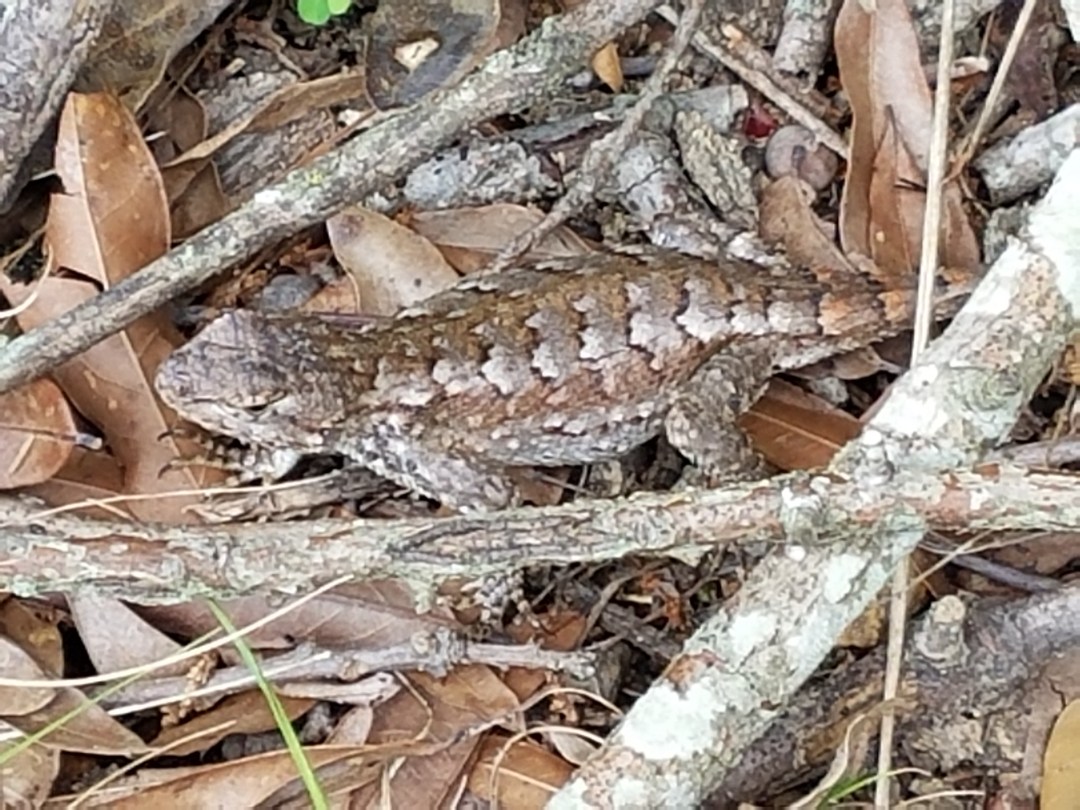
Making time in a school day for observation and reflection in nature can be challenging to say the least.  Many lessons and presentations can easily fill the daily schedule.  But if we closely examine what time immersed in the outdoor environment can offer, we will clearly see the necessity of ensuring this part of our day.

All academic study can be given roots as “extensions” in nature.  For example, if you completed a lesson on vertebrates and lizards, skinks, etc., finding the specimen above in the outdoor environment would be a living embodiment of that lesson!  This is exactly what happened following one of our classroom lessons — we decided to take a walk for a fresh air break and this fellow was sunning himself in a woodpile.  The students were so excited to make this discovery and admired his beauty.  We also had discussion concerning — why did this animal need to warm himself in sunlight?   What would his food be?  Who were his predators?  What is his defense?  Where is his home? (Note:  None of these questions ensued in the classroom!)

Similar examples of fully living academic lessons can be found in all disciplines of study.  Math, geometry, art, history, etc., are all reflected in the biodiversity of life.

First blog post

Today, I would like to share my own Montessori adventure with you.  I began my education as a Montessori child.  I recall the peace and serenity of the place, how honored and respected I felt that I was left to make choices and work alongside my friends.  I, of course, had no idea of the woman behind this educational wonder, only that I was contented and loved to work.  I could not know that this educational method was created for the intellectual and emotional being I was at that moment in time.

I also recall leaving that environment and being placed in a traditional school.  How strange and different it was!  I no longer felt peaceful and contented, only anxious about how many times I had to stop working and move to another subject and how students were pitted against each other for the best grades.  Many other children seemed nervous and lost as well.  I found ways to adapt and perform, but no longer felt the joy of learning.

When I became an adult with children of my own, these feelings regarding education again surfaced.  I saw my children as unique and endowed with their own interests and learning styles — how could I entrust them to a “lock-step” system?  I then had the fortuitous opportunity to be invited to learn more of the Montessori theory and how it empowers children to be avid, joyful learners, capable of designing their own future.  Delving into the scientific foundation of Montessori theory, I realized why it had spoken so loudly to my younger self — it was thoughtfully and lovingly designed for who I was at that time in my life.  I realized I greatly desired to create opportunities for all children to embrace that same joy of learning and to find inner peace.  My Montessori journey had begun…